Past projects summary
LANGO COMMUNITY TRUST
History
2002 – 2003
Lango Community Trust (LCT) was established in 2002 by a group of concerned individuals with development experience and skills. It was registered as a UK charity in September 2003 with the sole aim of solving the problems of chronic poverty faced by rural people in Lango Sub-region, northern Uganda.
LCT is a UK based charity which involves the Lango community in the UK in supporting poor and disadvantaged people in northern Uganda. It believes that sharing of skills and resources and the identification of local solutions are key to improved and sustainable livelihoods.
Past Reports
2003 – 2004 Capacity Building assessment in Lira District
LCT had consultations with local leaders and Civil Society Organisations (CSOs) to map out the needs of communities and the capacity of CSOs to meet needs from December 2003 up until April 2004. The results of the consultation helped us to identify the best ways to work with local partners.
LCT carried out an assessment of the capacity of Civil Society Organisations (CSO) in Lira, Uganda to effectively serve the needs of their beneficiaries and to work in partnership with UK based charities.
Eight CSOs worked in partnership with LCT to follow up the report.
LCT facilitated a workshop attended by representatives of 30 CSOs from which completed questionnaires were received and by local government officials.
Follow-up group meetings were held with representatives of CSOs that expressed interest. Also, separate meetings were held with District Administration officials and cultural leaders. LCT has used the information gathered from the questionnaires, the workshop and group discussions and consultations with District Administration representatives.
The following issues were identified:
- The major cause of the increase in poverty and suffering in northern Uganda in particular Lira and Oyam districts based in Lango Sub-region.
- The practical needs of poor people and how to addressed them through building the capacity of CSOs and the District Administration.
- To focus on the needs of more vulnerable groups such as girls, women and the elderly through targeted intervention (including advocacy complimentary services and partnership with other organisations) aimed at meeting the needs of such groups.
- To establish the foundations for longer –term capacity development support of the CSOs in Lira and subsequently Lango Sub-region to enable them take greater control over their own development and to meeting the practical needs of their beneficiaries.
2004-2006
Education Fund and Relief support
- LCT organised an emergency relief support for disabled placed people in Lira and Oyam Districts.
- With the help of Panasonic UK LCT set up an education scholarship/grant for the first 5 most vulnerable beneficiaries from Lira, Oyam and Amolatar districts.
- Capacity Building initiatives was made with the first three districts above.
- HIV and the elderly people in Lango Subregion survey was also conducted.
2006-2012
Extension of Education grant
With more regular contributions to the educational fund by the UK community and with the support of a donation from Allan & Nesta Ferguson Trust and Panasonic to LCT, 20 more orphans out of over 60 applicants were offered scholarships to progress to Senior Secondary, “O” level, “A” level and Tertiary education.
- 17 out of 25 beneficiaries progressed to university training level like Makerere, and Masaka universities. Others continued and gained “A” level certificates at St Katherine’s High School, Lira, Aboke High School and other colleges in Kampala (See model examples or cases studies).
2012-2016
L12 Development conference
- In 2012, Lango Development conference was held in Lira Town to draw up a development agenda for the youth and all vulnerable groups in the Sub-region, which includes the need to maintain scholarship fund for orphans and vulnerable girls in the Sub-region.
- Lango sub-region was split into 9 districts from the three districts with the hope of increasing capacity for each district.
2018
Partnership and development agenda:
In 2016, Anne Okello one of the Trustees visited Kwania and Lira districts and found there was need to absorb 50 young orphaned children to prevent hard labour and drop-out rate from education or miss the potential to pursue their aspirations.
- Kwania Orphans Education Centre (KOEC) was formed with the help of people who are passionate to see the most disadvantage and vulnerable children to poverty start a nursery education and be able to stay in education until they progress to acquire skills at a later age.
- 50 children were admitted to the education project with the help of fund raised. These 50 disadvantaged children managed to progress to primary education and to various secondary schools in northern and southern part of Uganda.
- 40% of these vulnerable beneficiaries were able to secure bursaries and sponsorship, leaving LCT to work with KOEC to raise fund for the 30 on the verge of dropping out to continue with vocational training in the areas of: nursing, teaching, business administration.
2019-2020
Ngetta orphans’ relief – Lira district
- In September 2019, LCT provided food relief support to Ngetta Orphanage 18 beneficiaries due climatic problems affecting food production and escalating food prices.
- LCT formed a development partnership with Youth at Work Development Initiative (YAWODI), based in Lira district.
- A focus group meeting was held in Lira to engage the community (i.e. clan leaders, youth and teenage girls).
Youth At Work Development Initiative (YAWODI) youth development project.
- 30 youth (between the age of 16-21 years) old from Ibuje, Apac district and other parts of Lira and Oyam districts. The youth development project approach is to plant trees in order to raise income but also to combat the negative effects of cutting trees and drought problems.
Youth and tree planting
A tree nursery established in Ojwina Division, Lira Municipality.
- i) 250 Mvule trees planted in Akalo Sub County, Kole district.
- ii) 100 avocado fruit trees planted in Akalo Sub County in Kole district.
Youth life skills/apprenticeship training
- 3 youth were trained in Lorena stoves production (environmentally improved cooking device) at Victoria School of Nursing and Midwifery, Lira City.
- 4 youth were trained and have become team leaders.
2020-2021
Covid-19 and tackling challenges: addressing the effects on teenage girls
LCT worked in partnership with YAWODI to raise awareness against unwanted pregnancies and organised for PPE equipment as follows:
- Held four radio talk shows to engage girls, clan leaders and the community across Lango sub-region via Radio Unity 97.7 FM, and QFM 94.3 reaching over 1.5 million people in Lango during the lock down period.
- Teenage groups from nine schools visited and empowered, became more aware of sexual education and were able to challenge unacceptable behaviour or traditional barriers to their education.
2021-2023
Addressing teenage pregnancies and forced early marriages
LCT has continued to work with KOEC and YAWODI as follows:
- Education grant: Provides education grant for 5 most disadvantaged girls and 3 boys (aged 16–20-year-olds) from Lango Subregion:
- 2 male beneficiaries have completed their education; one at Makerere obtained a Diploma in Civil Engineering and one in Nursing, Lira regional hospital.
- 2 female beneficiaries are currently at UCI nursing training, Lira and 2 are pursing BA Finance and Accounting at Uganda College of Commerce Lango branch.
LCT breaking barriers and Post COVID-19 Recovery Programmes:
Every teenage girl should have the opportunity to fulfil their aspiration to attain education certificate at vocational and technical college levels. 1 out of five girls in Lango Sub-region are more likely to drop out of education level without attaining qualification due to poor background.
35 of the most vulnerable teenagers from KOEC have benefited from LCT grant to gain ‘O” and “A” level qualifications until this academic year 2023/24. There are 20 applicants for education grant at “A” and Technical College levels.
Model Examples:
- UCI nursing college Lira.
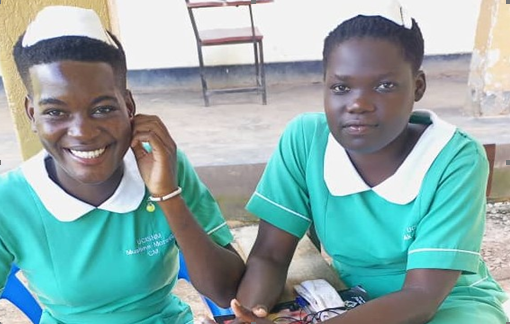
- Sandra Akot is a disadvantaged and the most vulnerable teenage female who was brought to the attention of LCT when on the verge of dropping out before attaining ‘O’Level certificate. LCT awarded her education grant and she has reached the final year of Nursing at UCI. Sandra states, “I feel so privileged to benefit from LCT grant and a top-up bursary to complete my Nursing degree in December 2024. Once I finish, I will encourage and help others to succeed as I did in nursing training”.
Winnie Aceng is also one of the most disadvantaged female teenagers who almost dropped out without obtaining a certificate until the case was brought to the attention of the committee for LCT education fund. She felt she was being pressured to marry against her will, but now feels safe to pursue her Nursing training at UCI. Winnie says, “I was happy when I was selected for LCT education grant. I look forward to completing my training in summer 2025. I intend to help vulnerable girls like me so that they too can achieve their potential”.
Uganda College of Commerce (UCC), Lango Sub-region branch
- Juliet Alepo had encountered pressure from all angles to give up her education as she had no one to help with school fee payment. She is currently pursuing a course in Accounting and Finance course at UCC Aduku branch. Juliet has expressed gratitude to the director who took up and assessed her case for LCT education grant. She looks forward to completing the course and being a mentor to future students with similar situations.
2023-2024 reports
Five groups of leaders were trained at Agropel training centre, Agwetagwet, Lira East division have set up their businesses in Lira City. More than three hundred youth have shown interest in engaging in this programme.
Y.A.W.O.D. I – Youth programme/projects
- i) Youth and agro-farming: tree planting and high-yielding crops
A feasibility study was done on cocoa planting to help generate income in the longer term.
It is hoped that the youth project will be extended to cover Otwal, Aduku, Atura, Alebtong, Otuke, Ayer, Akalo, Ojwina, Amac and Boroboro and self-help groups working with head of families.
- ii) Youth hairdressing, salons and mentoring programme.
The participants for hairdressing and salons told their stories that they have duplicated the self-help projects in Lira city and have started to reap income. The three participants aim to duplicate the business and to help with the mentoring scheme until 2025.
LCT would like to express its gratitude to individual donors and UK Trusts who have partnered with them.
LCT Board May 2025
Chairperson
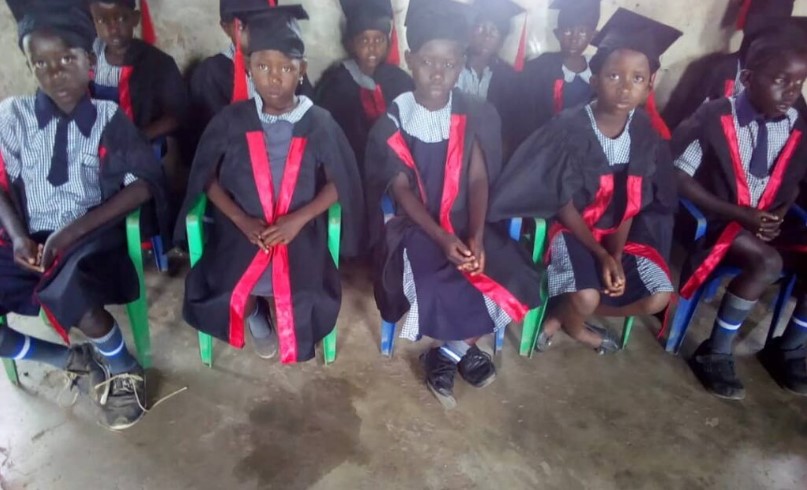
Recent studies show that multiple socio-economic factors in the community and the schools are responsible for dropouts. At one Primary School in Lango sub-region, hungry, barefoot pupils in old uniforms squeeze together on the concrete floor, sitting hip to hip, jostling for space. Some of the pupils use their laps as desks. Lack of interest, pregnancy, early marriages, hidden costs at school and family responsibilities have driven thousands of children out of school. Although there has been improved growth in economic activities in the sub-region after the 20 year insurgency, significant regional disparities in poverty still persist in Uganda.
The purpose of this project is to continue promote education and retention of girls and boys of vulnerable age (under 21 years of age from Lango Sub-region). Past projects are as listed below:
- With more regular contributions to the educational fund by the UK community and with the support of a donation from Allan & Nesta Ferguson Trust and Panasonic to LCT, 20 more orphans out of over 60 applicants were offered scholarships to progress to Senior Secondary, “O” level, “A” level and Tertiary education as indicated by model examples on Case Studies page.
- From 2016 – till to date, one of the Trustees visited Kwania and found there was need to absorb young under 6 years orphaned children in the area to prevent hard labour and vulnerability to poverty. Kwania Orphans Education Centre was formed with the help of people who are passionate to see these children start a nursery education. Thirty children were admitted with help of fund raised locally and empowerment of leaders. The board has worked with heads of families and teachers to keep these children and the number increased to 50 orphans. These children managed to progress to primary education and are about to join secondary schools. However, LCT now faces new financial challenge to raise £10,000 in order to retain the 150 orphans/girls under KOEC project, in Aboko, Kwania, Akororo and Gwakabbo site in Dokolo district. The project includes topping up school fees, funding or building a new vocational college to train beneficiaries in the areas of tailoring, catering, IT, Agro fishing, and mechanical work.
However, there are still more orphans dropping out of education or not starting secondary education because there is no one to pay school fees for them. Hence retention is very crucial as we are keen to see potential beneficiaries gain skills or qualifications to curb extreme poverty.
The major impact envisaged of this project is as follows:-
- Increased quality education for girl children.
- Increased female skilled labour force in the country.
- Poverty reduction among community members of Ocukuru Ogora, Bako and 132 remaining clans in Lango Sub-region.
- Reduction in early child marriages.
- Reduction in sexually transmitted diseases.
- Improved quality of standard of living of human beings in the long run.
It takes only £1 a day to sponsor a child through secondary school for a year. If you would like to make a contribution to the educational fund please see the donation page.
Upon a visit by one of the Trustees to Uganda in 2016, it was found that there were 30 vulnerable orphans in Aboko, Kwania due to extreme poverty and ill health amongst parents. Kwania Orphans Education centre was set up to absorb 50 vulnerable under 5 years old. The community in Aboko Kwania County were empowered to raise money in order to set up this initiative to reduce both girls and boys from child labour.
Kwania education project
(Aboko and Akororo sites)
150 beneficiaries from 2016- till todate
- KOEC – primary education project is hiring a site at Akororo to continue to train 150 pupils at at primary school. The schools have farms to produce food and cash crops to raise income.
This project was set up to take education closer to vulnerable young boys and girls to remain in education.
Ngetta orphans relief
Location: Lira district
- In September 2019, we provided food relief support to Ngetta Orphanage supporting 18 beneficiaries to due climatic problems affecting food production and escalating food prices.
Current Problems and challenges at hand
It is estimated that over 70% of the youths that attend schools are not able to complete tertiary and university education due to poverty and cultural discrimination against girl children. Statistics show that for every 10 drop out cases, 8 are girls; reflecting an awesome 80% of drop outs rate for girls. This situation is likely to continue in the future despite the government’s emphasis on girl child education largely because most good schools in the country are privately owned. As noted above, the majority of them, particularly girls, drop out of schools prematurely and end up in early marriages and other vices.
Drop out rate
According to a report released by the United Nations Educational, Scientific and Cultural Organisation (UNESCO, 2010), Uganda has the highest school dropout rate in East Africa. Kenya has a lower drop outs rate compared to Uganda, but higher than that of Tanzania. Hence, Uganda still has the lowest proportion of children staying in school up to Primary 7.
Projects in the pipeline
We shall continue with this poverty reduction projects as we continue to work with Kwania Orphans Education Centre (KOEC) with 150 orphans at primary school level for continuity to secondary, technical and vocational education. Also LCT is working with GWAKABBO to mount a new project to take education nearer to potential young people in Dokolo Districts to realise their potential in the near future as listed below:
- Working with Kwania Orphans education centre, to ensure 150 orphans between the age of 13 -20 continue to secondary and vocational training levels. KOEC requires £10,000.00 to construct vocational training centre in Aboko, Kwania Lango Sub-region.
- Also working with Gwakabbo to construct a school in Dokolo District, Lango Sub-region in order to increase educational opportunity to younger generation who are under 20 years old from Lango Sub-region as well as Uganda as whole. This project cost requires £10.000.00
- YAWODI youth development project. The proposal is to start with 30 youth (between 16-21 years) old from Ibuje. The project will be expanded to cover Otwal, Aduku, Atura, Alebtong, Otuke, Ayer, Akalo, Ojwina, Amac and Boroboro and self-help groups working with heads of families. The youth development project approach is to plant trees in order to raise income but also to combat the negative effects of cutting trees and drought problems. This project also includes planting food crops for short term solutions. Project costs to be confirmed.
Support and Give a Brighter Future
Do you know 1 in 7 girls in Lango Sub-region, Northern Uganda is more likely to drop out of education before the age of 18 years due to chronic poverty?